
How Is Homemade Pasta Made in Italian Restaurants in West Palm Beach?
- lksolutions25
- Jan 11
- 3 min read



Homemade pasta is one of the clearest signs of an Italian restaurant that takes its craft seriously. In West Palm Beach, where diners expect both authenticity and quality, many Italian kitchens still follow traditional pasta-making methods that date back generations.
Here’s a clear, no-nonsense breakdown of how homemade pasta is actually made in Italian restaurants.....and what separates true house-made pasta from shortcuts.
Step 1: Choosing the Ingredients
At its core, fresh pasta uses very few ingredients:
FlourMost Italian kitchens use either:
00 flour (finely milled, soft texture), or
Semolina flour (coarser, higher protein, slightly firmer bite)
Eggs or Water
Egg pasta (common for tagliatelle, fettuccine, ravioli)
Water-based pasta (often used for shapes like orecchiette or trofie)
Salt (minimal)Salt is usually added later in the cooking water, not heavily in the dough.
High-quality restaurants often source fresh eggs and imported Italian flours, which directly affects texture and flavor.
Step 2: Mixing and Forming the Dough
In most Italian restaurant kitchens, pasta dough is made in one of two ways:
Traditional Method
Flour is formed into a mound
Eggs or water are added to the center
Dough is worked by hand until cohesive
Modern Kitchen Method
Ingredients are mixed in a commercial mixer
This ensures consistency during busy service
Texture is still controlled by trained hands
The goal is a dough that is smooth, elastic, and not sticky.
Step 3: Resting the Dough (Critical Step)
Once mixed, the dough is wrapped and rested for 30–60 minutes.
Why this matters:
Allows gluten to relax
Makes rolling easier
Creates a silkier final texture
Skipping this step leads to tough, uneven pasta.....something serious Italian kitchens avoid.
Step 4: Rolling or Extruding the Pasta
After resting, the dough is shaped using one of two methods:
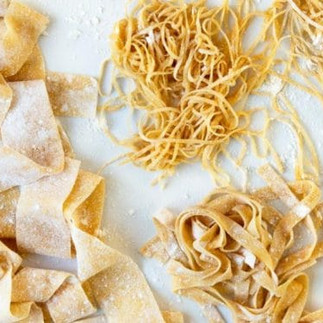
Rolled Pasta
Used for:
Tagliatelle
Fettuccine
Lasagna sheets
Ravioli
The dough is rolled thin using:
Hand-cranked pasta rollers, or
Professional sheeters found in restaurant kitchens
It’s then cut into precise shapes.
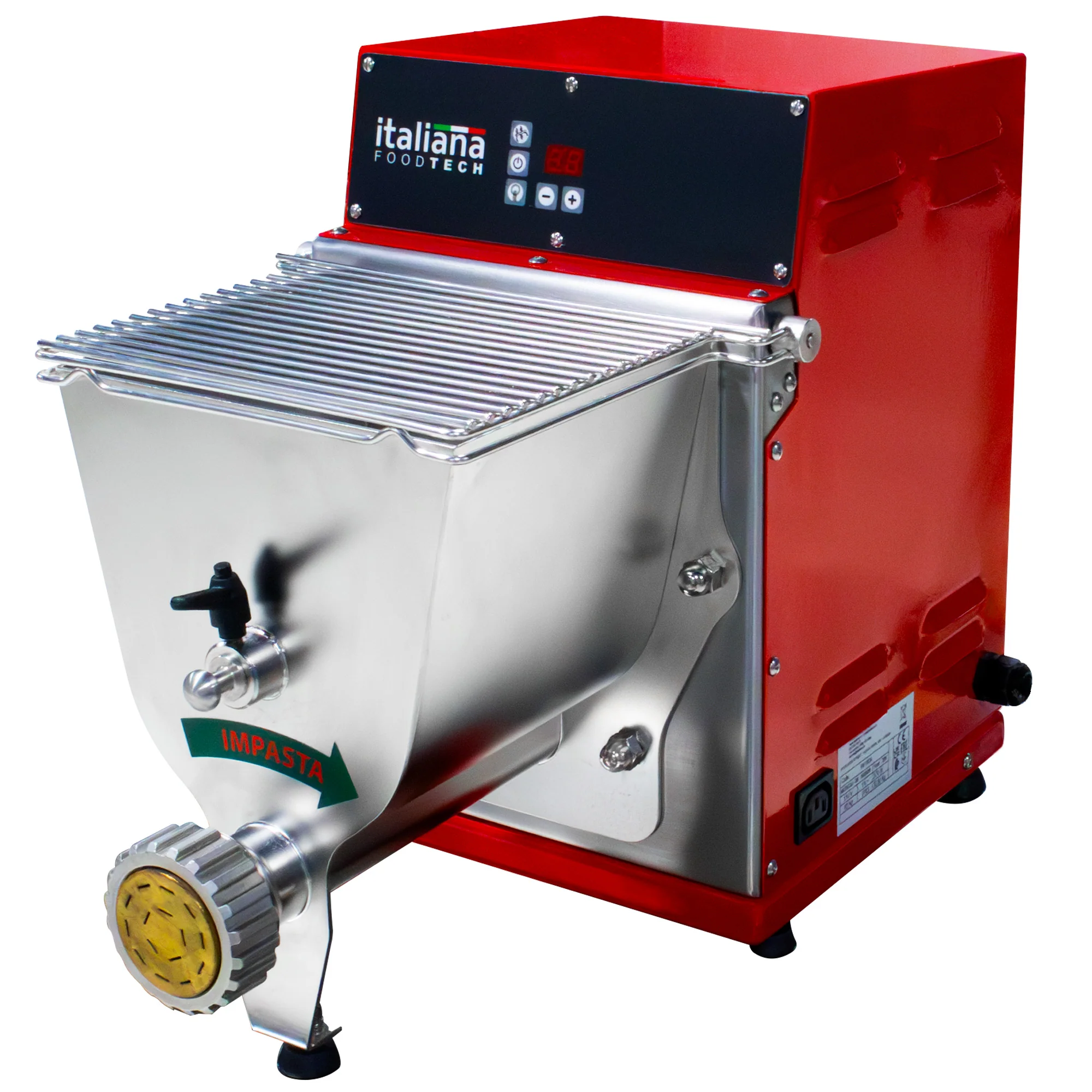
Extruded Pasta
Used for:
Rigatoni
Penne
Bucatini
Dough is pushed through bronze or steel dies.Bronze dies create a rough surface that holds sauce better.....a hallmark of quality.
Step 5: Shaping and Filling
For filled pastas:
Dough sheets are filled with ricotta, meats, or vegetables
Edges are sealed carefully to prevent leaks
Portions are cut and lightly dusted with flour
This step is often done daily or multiple times per week to maintain freshness.
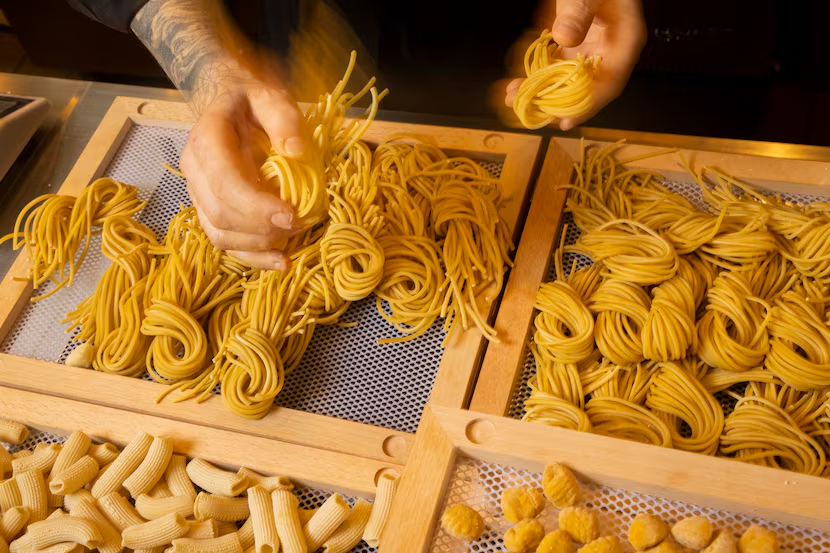
Step 6: Drying or Holding for Service
Fresh pasta is either:
Cooked immediately, or
Lightly dried for short-term storage (hours to a day)
Restaurants do not fully dry fresh pasta like packaged pasta.Fresh pasta is meant to be cooked quickly and served at peak texture.
Step 7: Cooking Fresh Pasta Properly
Fresh pasta cooks fast ....usually 1 to 3 minutes.
Italian kitchens:
Use heavily salted boiling water
Finish pasta in the sauce, not separately
Adjust texture by adding pasta water for emulsification
This final step is what creates that silky, restaurant-quality finish.
What Makes Homemade Pasta Different From Store Bought?
Homemade Pasta | Store-Bought Pasta |
Made fresh in-house | Factory produced |
Softer, silkier texture | Firmer, drier bite |
Cooks in minutes | Longer cook time |
Absorbs sauce better | Sauce sits on top |
This difference is immediately noticeable on the plate.
Why Italian Restaurants in West Palm Beach Still Make Pasta In House
Quality control – texture, thickness, and freshness
Flavor – eggs, flour, and technique matter
Authenticity – traditional Italian cooking standards
Guest experience – diners can taste the difference
Final Thoughts
Homemade pasta in Italian restaurants isn’t complicated....but it is precise.It relies on:
Simple ingredients
Proper resting
Skilled shaping
Fast, intentional cooking
When done correctly, it’s one of the clearest expressions of Italian culinary tradition, and a big reason fresh pasta remains a standout in West Palm Beach Italian dining.
Comments